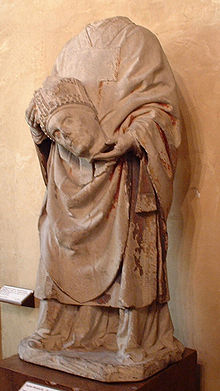
Latin Mass: 19th Sunday after Pentecost
Friends in Christ, the Holy Gospel today speaks of this ‘wedding banquet’ that the king put on for his son. In this parable, Our Lord surely is pointing to the Holy Mass. Mass is the center of our life, and so I will tell you, it breaks one’s heart to hear of parents who don’t bring their children to Mass, or even teach them their religion.
.
The Catechism says, ‘parents have the first responsibility for the education of their children.’ The Catechisms also says, “The role of parents in education is of such importance, that it is almost impossible to provide an adequate substitute.’
.
So it is clear that parents may not sooth their consciences by merely dropping kids off for CCD or to Catholic school. The primary educators of children in the Faith is the parents.
.
Now you can ask any of the 800 priests in the Archdiocese about those children who know nothing of how to pray or who is Jesus Christ, and they will all tell you that even the best parish programs are ineffective if the parents won’t teach the children at home. Completely ineffective. The poor children.
.
But today we will not speak about those homes where mother or father is more cruel than a ferocious lion, in which the children live in fear; there they cannot find God at all.
.
But for families who love their children, their formation in the Christian faith is of utmost importance. A child’s future, whether for good or bad, depends largely on how he is brought up. Even in the animal world for heaven’s sake, we see animals teaching their young how to survive.
.
Unfortunate child, whose parents do not discipline him, or who, when involved with bad friends or bad habits, do nothing. Scripture says, ‘Train up a child in the way he should go, and when he is old he will not depart from the way.[i] Yes, young people often go through stages of rebellion, but they usually return to the way they were first taught.
A parent was horrified the other day – she was telling me of the troubles raising her son, I told her, ‘Sociologists tell us that although children go through rebellious modes and many things, in the end they usually turn out a lot like their parents.’ She was horrified!
.
St. Alphonsus says,[ii] God gives children to parents that they may be brought up in the way of salvation.’ ‘Children, he says, have not been given to parents as a present, but as a trust, for which they must render an account to God.
.
So how do we teach our children the faith? A good start, is when they are young, to read little books with them about Jesus and the saints. Get a children’s bible and read it with them. If they go to catechism class, or Catholic school, then pick up their religion book and ask them about it – ‘What is this? What did you learn? Let’s read this lesson.’ And above all, we teach best, by good example.
.
St. Teresa of Liseux became a saint because she had such a wonderful example in her loving father.
St Lucy became a saint, because her mother taught her, and even risked her life to take her to Mass.
.
The essentials we must teach to our kids: The Holy Trinity, that God is a loving God, who knows you and hears you.
We must tell our kids about the creation, the fall of Man, the first sin, and God’s promise to send a Savior.
We can show them this at the beginning of the bible.
.
The stories of the Old Testament we can read, and explain that these are signs, pointing to the coming Savior.
.
The Gospel: that God sent his own Son to save us; the birth of Christ to Mary, his life, death, and resurrection. And the Church he gave us, the Holy Sacraments. And why we go to Holy Mass every Sunday.
St. Paul tells parents to ‘bring up your children in the discipline and correction of the Lord. By ‘discipline,’ he means teaching them to live the moral life and habits of virtue. Even in very ancient times, it was understood the importance of raising children well. Moses said, we must teach our children the commandments and love of God; then he said, ‘Drill them into your children’. (Deut 6) To ‘Drill’ children, means to go over and over the things. Ask them to recite the 10 commandments over and over, and their prayers – until they are perfect.
.
One saint says, if parents do not instruct their children in the faith, they and their children will end in damnation.
Parents worry that kids have the best school, stylish clothes, a ballet teacher, the best coach, good health – but what about the most important thing? Salvation?
.
In the baptismal rite, we pray the prayer of exorcism, we ask that Christ cast out the power of Satan, the spirit of evil. From birth, the devil wishes to capture each person. Now how could a parent bear it, if their precious child should end up captured in hell forever. How could anyone bear to see their own child lost in this way?
.
We must guide our children with love and discipline. We guide them to have good friends, not bad ones. We are careful about what they listen to or watch – most tv is bad – most of it.
Guiding adolescents in dealing with the opposite sex. This requires refinement, helped by grace and the advice of other parents.
.
But more than advice, we must be convinced that our children won’t be able to live a good life, and be a great person without prayer. We must teach them to pray, and help them to advance in prayer as they mature, to develop an interior life.
.
I was with a group of young people; I said, ‘well, let’s say the Hail Mary.’ One girl said, ‘I don’t know it Father, I was never taught.’
.
Our children have to be taught their faith, in order to be great on this earth, and to be happy in heaven.
To know Jesus, and Mary;
Mary, help us to become worthy of the promises of Christ.
.
[Entrusted to the prayers of St. Pelagia]
.
[i] Prov 22:6
[ii] See Sermons of St. Alphonsus on Education of Children.
Friends in Christ, among the saints on the calendar today, is St. Margaret Mary Alacoque. Margaret Mary was born in 1647 in France. She had a difficult childhood in her family, and also poor health, yet from the age of 7 she felt an intense love for Jesus in the Holy Eucharist. The Lord appeared to her often, usually as the Crucified Christ; not knowing any better, she thought that Jesus appeared to many people.
.
Once, as she was returning from a dance, Jesus appeared and asked her why she had not taken Him as her Spouse. At age 23 she entered the Visitation Order of Sisters, and so she DID take Jesus as her Spouse.
She was sickly, and also rather clumsy, but she had a heart of gold. Sister Margaret Mary often chose the most menial tasks by which to offer her humility to God. Gifted with intelligence and common sense, she made great progress in holiness. Jesus appeared to her more, and he also asked her to spread devotion to his Sacred Heart; this is how the 1st Friday Devotion began.
.
Today we had our monthly time of adoration with the students. The whole school is here, before the Eucharistic Lord. Even the little children like it very much: to honor Jesus in the Holy Eucharist. But it is because they know His Heart.
Among the prayers we say, are excerpts from the Litany of the Sacred Heart:
‘Heart of Jesus, full of goodness and love, have mercy on us.
‘Heart of Jesus, worthy of all praise, have mercy on us.
‘Heart of Jesus, patient and most merciful, have mercy on us.
Heart of Jesus, salvation of those who trust in you. Have mercy on us.
The children perhaps more easily than us, see the love of the Heart of Christ. The Heart of Jesus, is the source of all happiness.
Friends in Christ, today is the Feast of St. Teresa of Avila.
It was just 3 weeks ago, when I was in Spain for the beatification of Blessed Alvaro Portillo, we went to visit Avila. It was a joy to stand in the Convent where Teresa had begun, and it made me think of so many of her beautiful writings.
At least once in everyone’s life the writings of St. Teresa should be read. She is full of a lot of very practical wisdom. Let us today, read a bit from her writings on the interior life. (p. 222 V2)
.
She says, there are ways that people in the world can have a false peace inside of themselves. They seem to be tranquil, as they go through their life even in serious sin and caught up in vices. This is because their conscience feels no remorse about anything. This inner peace, is a sign that they are friends with the devil.
.
While they live, the devil does not wage war against them, because he has already caught them. but I hope that such evil will not be found among you, she says. When a person begins to grow lazy and lax in the small things, in the little things of God, without any remorse of conscience, this is very bad. If we are lazy about our prayers, or cut corners in helping others, or stop being concerned about minor sins, then the devil can draw us into a thousand other evils. There must be war in this life; it is not possible for us to be lax, we must ever be attentive to our interior life.
.
There is always the temptation to avoid God’s will in the little details of life, yet it is these temptations, it is in this war, by which we can please God. I don’t say that this war must be going on always, but know that this war is a wonderful favor from the Lord, for it is by means of these struggles in daily life that we are able to advance in holiness. If we love God and fear ever displeasing him, we will gain very much. But if I see a person who is always quiet, without any war – I always worry for them.
.
While it is true that those who have fought the war a long time, and are quite advanced, often experience a great peace – we are not there yet. So let us always fear, if when we commit some fault, it does not bother us.
.
So says St. Teresa, about the inner struggle for holiness. It is by the struggle itself, the ‘war’ as she calls it, by which we really grow and become closer to God.
Latin Mass: 18th Sunday after Pentecost
Friends in Christ, during World War II, Albert Speer was Hitler’s head of armament production. He escaped the death penalty at the Nuremburg trials, because he claimed to not know about the atrocities.
Once, he had been advised by another official that he should never accept an invitation to visit a concentration camp, because that official had seen something that could not be described. ‘From that moment on, says Speer, ‘I was morally contaminated; I feared to discover something – I had closed my eyes.
.
Beloved in Christ, October is Respect Life Month. It is the month when we remind ourselves and others of the holocaust going on in our own society: the abortion of little children, and other crimes against humanity.
We do not close our eyes to it. In fact, we Catholics must be ambassadors for Christ, spreading the gospel of life.
.
Many of our leaders who are supposed to be the traditional defenders of life, have turned their backs on this responsibility.
Mother Teresa said, ‘It is a poverty, that a child must die so that you may live as you wish.’ ‘Freedom, people say, is to be able to do whatever you want. And that may mean, that someone else needs to die – so that I may live as I wish.’
.
We are here speaking of the poison of abortion, in which a child must die so that our society can continue on with its “free-love” with no consequences. But this is not love at all. It is hedonism.
.
But let us today, also look at the other end of life. The elderly and those who are dying. There is a problem here as well. St. John Paul II said, ‘A society will be judged on the basis of how it treats its weakest members and among the weakest are the unborn and the dying.’
.
It is not uncommon, to receive a call to go to a dying person. One goes to the hospital, to the room you’ve been given. And often, one finds only the dying person there. A relative put the call in to the priest, but they are not there. They just want it “taken care of.” Friends, no one should ever die alone.
.
‘He just sleeps all the time, so I go and take care of other things.’ ‘Dad doesn’t even know if I’m there,’ people say. Really? You might be wrong about that. And even if it’s true, how can a person not accompany their parent, or sibling, or friend in this last journey, at least with their presence.
.
No one should die alone, yet it is happening often. Of course there are sometimes circumstances when a person can’t be there. Perhaps he is on a trip to Japan. No time to get back. Perhaps he is himself a doctor trying to save a life, or a priest, who must put his people ahead of his own family. But unfortunately, it is more common that a person simply does not wish to be inconvenienced. ‘I have my life, my routine, and mom’s quality of life is no good anyway.’
.
People speak too much today about “quality of life.” ‘Unless you can be a productive member of society, then giving medical treatment is useless, they say. Just be done with them.
I knew a case where a son was literally trying to speed up the death of his father, because he never did like him. There are cruel things going on during the sacred time of death.
.
We see in the gospel today the love and care that Jesus has for the sick man in his bed; this is the example he gives us. Yet today, we are crawling toward that evil of euthanasia: putting people out of their misery, as if they were dogs, because death interferes with our nice routine.
.
The Church teaches, that we are not required to accept extraordinary means to stay alive. So, if a person is in very bad shape, and is being kept alive by a lung machine or something – then that person CAN choose to just let nature take its course or they may choose to keep going.
.
Food and hydration however, are not extraordinary means, even if food must be given by a tube or in an artificial way; we need to give food and drink because these are normal parts of living.
Of course, if the body won’t tolerate food or hydration, which sometimes happens in late stages – or if it is causing other problems, then this is not required.
.
Pain medication may be used as necessary, even if, as a side-effect, it might shorten life, but it may never be given with the intention of shorting life, that is killing.
‘But let’s end dad’s suffering, let us hurry up his death.’ No. That is a sin.
.
Now many times, a person can no longer make these decisions because of the illness. In this case, it is best not to use a Living Will, or a POLST[i] directive. It is not a good idea, to write down all the things you want or don’t want, because situations change.
‘Oh, I never want extraordinary means to keep me alive.’ Great. But let’s say you only need a respirator for one day and then you’ll be fully recovered and go home. Too bad, you said ‘no’ to respirator.
Better than trying to predict things, give someone you trust the power to make all the decisions, and explain to them your thinking. This is better. You can give them the Power of Attorney for Healthcare.
.
But the most important thing, is that we be ambassadors of life: speaking about, and being witnesses to the dignity of human life, from conception, to natural death.
May the Blessed Virgin Mary pray for us and our world, that everyone would always be treated with the dignity they deserve as children of God.
.
[Entrusted to the prayers of Blessed Bartolo Longo]
[i] Physician Orders for Life-Sustaining Treatment
Friends in Christ, today in the gospel, at first glance, it appears that Jesus does not welcome the praise of his Mother. “Blessed is the womb that carried you and the breasts that nursed you.’ “Rather, he says, blessed are those who hear the word of God and keep it.’
Strange. Yet as with many mysteries in the Holy Scriptures, if we ponder it, we see something great.
.
Jesus downplays relationships of the flesh, and says that the greatest in the Kingdom, are those who do God’s will. But if we stop and think of what Jesus said, we will notice that the one who DID hear God’s word, and obey it – the one who did it perfectly – is his Mother!
So Our Lord’s statement was best carried out in Mary. The crowd would not have gotten it, but the reader of the Gospel is supposed to see it. The Blessed Virgin did the will of God in her life perfectly.
.
St. Francis de Sales[i] says that the members of the Church hear the Word of God often – the Lord gives his inspirations and promptings, communicates his will. But many do not listen to, or keep, this word of God. Some live only a worldly life, and frequently act contrary to these inspirations.
.
Others indeed listen to the promptings of God in their life, and sometimes follow them, but more often choose their own will, the keep some back for themselves.
But Mary was different. She was blessed, because she heard the word of God and kept it.
.
Consider her flight into Egypt with St. Joseph. ‘Mary, where are you going with this little Child? I am going to Egypt.
What makes you go there? God’s will.
Will it be for very long? As long as it pleases God.
When will you return? When God commands it.
.
Mary DID do God’s will, better than any others, and so it is his Mother that Jesus has in mind, when he says this.
.
But God’s will is also, that Mary would be our Mother. ‘Behold, she is your Mother,’ Jesus said on the Cross.
And so that lady in the crowd is speaking of us as well: ‘Blessed are the breasts that nursed you.’
Mary is nursing us, as well as Jesus: all her children.
.
Richard of St. Laurence[ii] says that the breasts of Mary readily give the milk of mercy. The mercy of Mary, he says, is bestowed on all who ask it.
St. Peter Chrysologus says, this favored Virgin, having received God in her womb, demands in return, peace for the world, salvation for the lost, and life for the dead.
.
Mary, pray for us, that we may be worthy children of yours;
that we may become worthy of the promises of Christ.
[i] The Sermons of St. Francis de Sales on Our Lady, p. 130.
[ii] Glories of Mary, p. 132
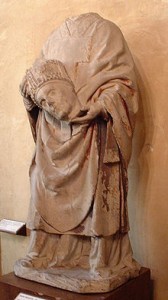 Friends in Christ, today there are a number of great saints on the calendar, but let us here speak about St. Denis.
.
He was born in Italy, and in his youth he was known for his virtuous life and knowledge of sacred things. He studied to become a priest, and later became a bishop; in 250AD, Pope Fabian sent him and others to France on a dangerous mission of evangelization.
.
At that time a horrendous persecution had been raging in France by the Emperor Decius, and the Christians there had all but been exterminated. Denis, with his companions, the priest Rusticus and the deacon Eleutherius, arrived at present day Paris and settled on the island in the middle of the Seine river.
.
There, they built a church and began offering Holy Mass daily. The remarkable witness and preaching of St. Denis led to countless conversions to the Catholic Faith. This however, aroused the envy and hatred of the Druid priests in that place. They incited the people against them, which led the local governor to seize Denis and his companions. They were mercilessly beaten, racked, and thrown into prison.
.
In the prison Denis celebrated Mass for the prisoners and was about to give out Holy Communion when a bright light appeared in the place; it was the Lord Jesus who appeared there to strengthen and encourage them. The next day they were taken to the highest hill in Paris where the Druid priests conducted their rituals – there they were beheaded: Denis, Rusticus, and Eleutherius.
.
In perhaps the most remarkable miracle ever, after his head was chopped off, Denis stood up, took his head in his arms, and marched 6 miles from Montmartre, preaching the entire way to the place where he finally died. There was built the great Basilica of St. Denis.
.
St. Denis is honored as one of the 14 Holy Helpers; he is often pictured as a bishop carrying his head. He is the patron saint of France, of possessed people, and of headaches.
Latin Mass: 17th Sunday after Pentecost
‘And a doctor of the law asked him, tempting him, ‘Teacher, which is the greatest commandment?’
.
Friends in Christ, In the Gospel we find this scholar of the law questioning Jesus. He is not really seeking an answer, rather, it is an effort at entrapment.
.
He addresses Christ as ‘didaskalos,’ which means ‘teacher.’ But this is clearly said out of contempt, because those who wish to learn do not ‘test’ their teachers.
.
As Erasmo Leiva Merikakis says in his book on St. Matthew,[i] ‘this strategy of entrapment, popular with the Pharisees and Sadducees makes for a dramatic background,’ because the moment Jesus begins to give his answer, the first words out of his mouth are, ‘You shall love.’
.
‘You shall love the Lord your God with your whole heart.’ The contrast is clear: the Pharisee’s contempt versus Jesus’ invitation to love.
Although Our Lord appears to be merely answering the question, in reality, he is reproving them for their conniving attitude.
.
‘You shall love the Lord thy God with thy whole heart, thy whole soul and thy whole mind.’
Jesus could have quoted scripture, ‘You shall not put the Lord your God to the test,’ but instead he says, ‘You shall love.’
You shall love, rather than scheme and plot and destroy – .
.
St. Francis de Sales says,[ii] we should love God ‘simply.’ There should be a simplicity of heart in our loving God. Simplicity of heart means not being over-complicated; it means not worrying about what others think; not putting on airs or nuancing our speech, or over-thinking everything out of human respect; and it certainly means not being duplicitous like the Pharisees, speaking one way, but thinking another.
.
This is the virtue that Christ valued when he met Nathaniel: ‘Oh finally, he said, an Israelite without guile.’
Simplicity in our love for God, means that if we do something wrong or make a mistake, we do not waste time questioning and reviewing our every word; we leave it to Divine Providence and go forward.
.
Now some people think that simplicity of heart – acting without over-thinking everything – they think this virtue is contrary to prudence, but this is not so. Simplicity is contrary to cunning.
.
Cunning means we are speaking and acting in one way, but really, we wish to deceive or manipulate our neighbor.
Cunning desires to subtlety lead our neighbor to the point for which we are scheming.
Cunning is contrary to simplicity, because to be simple means that our interior should match our exterior.
.
Some politicians that we see, answer questions with great care, trying to say the things that will give a certain impression – thinking about votes; we can tell there is no simplicity there.
But when a person speaks right from the heart and hides not his real intentions but is sincere, we trust that person. And that person also has an inner peace. When a snake is being attacked, it will expose and sacrifice it’s whole body in order to save it’s head. We too, in living simplicity, must take the risk, and expose the truth of our heart.
.
But this does not mean that our emotions and worries should be given free reign. As St. Francis says, we must discriminate between the effects of our higher soul versus our lower soul. A simple love of God requires that we sometimes restrain our feelings, mortify them and subdue them, in order to present a calm exterior, because simple love of God is in the will, not the emotions, and love of God sometimes requires us to present a calm exterior under stress.
.
‘Thou shalt love the Lord thy God with thy whole heart – and thy neighbor as thyself.’
Our dealings with our neighbor should be sincere, forthright, and without deceit, but the motive for this must be a simple, love of God.
.
When a child is very young, he is in a state of such simplicity that he thinks of nothing except his mother. He has only one love: his mother, just so, perfect simplicity has only one love: God.
.
The pagans knew nothing of this virtue. The great philosophers of antiquity spoke eloquently on many virtues: fortitude, prudence, perseverance, temperance – but they said nothing at all of simplicity, it is strictly a Christian virtue.
.
One time, Jesus appeared to St. Faustina in the form of a little child; she asked, ‘Lord, why do you take the form of a small child when you come to me? Jesus replied, ‘Until you learn simplicity.’ A child is never filled with anxiety or stress. The child’s world is simple: obey those whom it is your duty to obey, because you can trust them. And then keeping going. We adults, on the other hand, are too complicated. We worry; we want God’s will – but we also want our own will. We try to serve God and mammon.
.
You have heard that expression, ‘If you want to make God laugh, tell him all your plans.’ We say we will love God with our whole heart, that we only want his will – yet we also want this to happen, or that thing to turn out a certain way for us. But the Lord wants us to love him with our WHOLE heart, and soul, and mind. And this is simple love. Uncomplicated love. Simple love of God feels very free, it has nothing to hide.
.
St. Vincent de Paul valued very much, simplicity of soul. ‘Simplicity,’ he said, leads us straight to the kingdom of God. A person who is sincere, and good, and not a schemer or a fraud – for such a person, people have great affection.
.
Loving God simply, is a great virtue. It leads us to tell things candidly, just as they are in our hearts. It leads us to act simply, without hypocrisy or cunning or pretense. The Pharisees who speak to Christ with a forked tongue in their subtle machinations, they are not people of inner peace. They do not have peace inside.
.
In the past week, two different people asked me: ‘Father, what does the word serenity mean?’ Serenity is what we want, inside; the interior freedom, found in simplicity of soul, in loving God without qualification.
.
And you know, simplicity of soul is found beautifully in the Blessed Virgin. Here is what Servant of God Fr. John Hardon said: ‘Among the virtues that we should especially try to imitate in Our Lady, I would place her simplicity near the top. ‘The more you deal with souls,’ he says, the more evident it is that what we need today is simplicity. This is partly due to the complexity of modern civilization. What does it mean, he asks, to live a life modeled on the simplicity of Our Lady? It means no pretense.
.
Help us Mary, to always have a pure and simple love of God, that we may find the serenity, of life in Christ.
.
[Entrusted to the prayers of St. Bernadette.]
[i] Erasmo Leiva-Merikakis: Fire of Mercy, Heart of the Word: Meditations on the Gospel according to St. Matthew, p. 578.
[ii] The Art of Loving God, p. 105-122. Ideas and quotes here are from this book.
Friends in Christ, today is the Feast of St. Francis of Assisi. And of the many things written about St. Francis, let us today hear of one incident in his life. It is from the book: ‘The Little Flowers of St. Francis.'[1]
.
In the early days of the Franciscans, it was known by some, that Francis would often rise in the middle of the night to pray. And his reputation for holiness was great.
.
Well a certain innocent child was visiting the brothers; he had heard of St. Francis, and wanted to learn from him, and especially to find out what he did in the night.
In order that he would not be overcome by sleep and miss out, he tied a cord from his waist to the rope on Francis’ tunic. This way he thought, he would be awakened at night if Francis got up. He tied it very gently, so that Francis was not aware of it.
.
Now when all the brothers were fast asleep, Francis rose up, and finding the child’s cord tied to his tunic, he carefully untied it, so as not to awaken the child; then he went alone into the nearby woods to a chapel where he could pray in the quiet of the night.
.
Shortly after, the child awoke, and finding Francis gone and the cord untied, he rose up quickly and went to seek him. Perceiving that the door was open, he thought Francis had gone that way; and entering into the woods, and on to the chapel, he came to hear the sound of many voices.
.
As he approached, he saw a great and wonderful light all round the saint, and in the light, Francis was speaking with Jesus, and Mary. Also present was St. John with many angels. On seeing this the child fainted and fell to the ground.
.
When the vision ended, Francis went to return home, but stumbled over this child, who appeared to be dead. With great compassion he took him up in his arms and carried him in his bosom, as the good shepherd carries his lambs.
.
Later, when the boy had revived, Francis forbade him to tell anyone of the vision until after his death; the child grew up to become a distinguished man of the Franciscans, who later related the whole incident to the brothers.
.
Perhaps not in visions or miracles, yet we are called, like Francis to enter into conversation with the Lord and the saints. This is what it really means to pray.
On this Feast of St. Francis, the Blessing of pets will be at noon today, outside.
[1] Little Flowers of St. Francis.
Children’s Homily:
Good morning young people of St. John Vianney. Today in the Gospel Jesus says, Woe to you, Chorazin! Woe to you, Bethsaida! When Jesus says, ‘Woe to you,’ he means, you are in big trouble.
This reminds me of a man named Ananias, who lived back at the time of the Apostles. He got in big trouble! Ananias had some money that he was going to give to the apostles to help the poor; but he lied about it to St. Peter, and kept some for himself; Then St. Peter said, “Ananias, how is it that Satan has filled your heart, that you have lied? And at that moment, Ananias fell over dead.
.
Lying is a real sin, and it displeases God. A person who tells even small lies easily, we can say that he has become a liar. People lie because they think that by telling the lie, their life will be easier, or they will avoid trouble or punishment.
.
But do lies really get us out of trouble? Maybe for a short time, but then they get us into more trouble. When we tell lies, we are acting like the devil. He tells lies all the time.
.
Lies are told for three reasons: a) because we think it will gain us something or make our life easier. For example, when mom asks what we were doing in the garage, if we say – just talking – but really, we were playing with matches, we told a lie, so that we would not get in trouble. But what happens? Maybe we start to become a dangerous, fire person?
Maybe the next day, we do it again, and we accidently start the garage on fire, and while it is burning to the ground, and dad is worried that he does not have the money to pay for it, and the car got burned up too – we wish we would have not told that lie in the first place.
.
b) We might also lie because the lie will get us some pleasure. For example, dad says, if you get an A on your test, he’ll take you to the water park. And so when he asks you what grade you got, even though you got a B, you say you got an A, that is a lie. And though you go to the water park that day, you feel guilty, and when dad finds out you lied, you will be very unhappy, and you will say, ‘Why did I ever tell that lie!’
.
c) The other reason we might lie, is to be cruel to another person. For example, we might tell a lie about our classmate, so that everyone thinks that person is bad, and I’m good. Such lies might make us look good for a moment, but soon, what happens? People find that we are not to be trusted. They call us a liar.
.
To tell a lie about another person, is called calumny. To tell someone’s faults or sins, even if they are true to make the person look bad, that is called detraction.
A lady told me the trick to remember these two. Calumny has an ‘L’ in the middle of it – that is for a lie. Calumny tells lies about someone.
Detraction has a ‘tr’ in the middle of it – tr is for truth. Detraction tells a truth, but a bad truth about another person.
.
We are never allowed to tell a lie, even if it seems to get us a good thing. We need not always share our knowledge when asked. But we may never lie.
.
But if we have a habit of lying, we can change. We should confess all our lies in confession, and then promise Jesus that we will try to stop.
Before St. Peter became a great saint, he told a lie. When they asked him if he knew Jesus, he said: ‘I do not know him.’ He lied because he was afraid. But Peter was sorry, and he never lied again the rest of his life. So if St. Peter can stop lying, we can too, then we will be very happy, we will be a person of integrity, and others will always find us to be trustworthy.
Friends in Christ, today is the Feast of the Guardian Angels. This week, the kids in school will be asked 34 questions on angels. Here are a few of the questions:
1. To be a Catholic, is it required to believe in angels? Yes, it is a De Fide teaching.
2. Do angels have bodies? No, they are spirits.
3. Do angels have a great intellect and intelligence? yes
4. What is the name given to bad angels? devils or demons
5. When we die, do we become angels? no, they are a different species! When we die we will be resurrected in our bodies, angels don’t have bodies, it’s not their nature.
6. Does each person have a Guardian Angel? How do we know? ⇒
.
Well, in the gospel today, Jesus assures us that we have a guardian angel. Referring to children, Our Lord says, ‘I tell you, their angels in heaven always behold the face of my Heavenly Father.”
.
Also from scripture, remember when St. Peter had escaped from prison, and was standing at the house knocking? They said, ‘it can’t be Peter, it must be – ‘his angel.’ So we know of our Guardian Angel from scripture, and also the tradition we inherited from the Jewish people.
.
Padre Pio saw his guardian angel often. A man had met Padre Pio and was complaining about his troubles. He says: Padre Pio was looking at something, right next to me; he had a wonderful look on his face, and he asked me: ‘Do you believe in your guardian angel?’ I said, ‘I – I’m not sure. It was then that Padre Pio shook me and said ‘Look! He’s close to you, he’s beautiful!!!’ He could see angels. So could other saints like St. Gemma.
.
Padre Pio’s Guardian Angel once said to him: ‘I am always close to you. I watch over you always; my affection for you will not end even when you die.’
.
St. Josemaria had a practice, of when he met a person, to first greet that person’s guardian angel. One day in 1972, the retired archbishop of Valencia, along with his secretary, went to visit St. Josemaria. They were good friends, so that when they met, St. Josemaria, to have some fun with him, asked him: “Marcelino, let’s see if you can guess – whom did I greet first?” The archbishop replied, “You greeted me first.” “No,” said the saint, “I greeted the VIP first.” The Archbishop was perplexed; he said, “But of the two of us, my secretary and me, I am the ‘VIP’.” St. Josemaria replied: “No, the VIP is your Guardian Angel.”
.
Every single person is important to God; so important, that God gave each of us an Angel; a powerful and lovely angel whom we should greet often, during our day.